Our mission: ‘To encourage and improve horticulture in NZ by promoting the understanding, appreciation, conservation and use of plants’.
Plant Doctor Archive
Black spot on roses

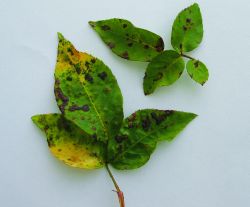 THIS year our roses are affected by black spot. Is
there an organic spray we can use? Also, is untreated sawdust a
good mulch for the garden?
THIS year our roses are affected by black spot. Is
there an organic spray we can use? Also, is untreated sawdust a
good mulch for the garden?
 SOME rose varieties are
susceptible to black spot, but other than changing your roses to
more resistant ones, there are several actions you can take to
reduce the incidence of the disease.
SOME rose varieties are
susceptible to black spot, but other than changing your roses to
more resistant ones, there are several actions you can take to
reduce the incidence of the disease.
In late winter, after pruning, make sure you clean up all dead leaves and prunings from the soil beneath the plants to get rid of much of the source of reinfection. Cover the soil surface with clean mulch such as granulated bark and change it each year after pruning. Then immediately give your roses a thorough spray with a copper fungicide, mixed with spraying oil, such as Eco Oil or Conqueror.
In spring, when new growth appears, you could spray with a preventative fungicide such as Nature’s Way Fungus Spray, which contains both copper and sulphur, or you could alternate between separate copper and sulphur sprays in the form of Copper Oxychloride and Super Sulphur. These sprays are organic in nature and safe to use as long as you follow the label recommendations.
Some gardeners report several sprays of seaweed-based fertiliser during the growing season helps reduce black spot problems, so that could be worth a try also.
Untreated sawdust is fine as a mulch as long as you apply a nitrogenous fertiliser at the same time to counteract the nitrogen “draw-down” effect that can occur with wood products as they decompose. Check with your local garden centre and get a fertiliser with the amount of N (nitrogen) higher than P (phosphorous) and K (potassium). If you don’t counteract the nitrogen loss caused by the decomposing sawdust, plants in your garden may eventually show nitrogen deficiency symptoms such as poor growth and yellowing of leaves.
Weekend Gardener, Issue 189, 2005, Page 25

Advice by Andrew Maloy, former Plant Doctor of the Weekend Gardener and Kiwi Gardener magazines
Plant Doctor Archive
700 gardening Q&A’s
Source

- The views expressed here are not necessarily those of the RNZIH
- Content or advice may be out-of-date.