Our mission: ‘To encourage and improve horticulture in NZ by promoting the understanding, appreciation, conservation and use of plants’.
Plant Doctor Archive
Ailing hedge

 I HAVE bought a house with an existing hedge
of lilly pilly trees. One is looking rather sick and the disease
seems to be spreading to some of the others. Some of the branches
have lost their leaves. I’ve tried fertilising the trees, but it
has made no difference. Can you help?
I HAVE bought a house with an existing hedge
of lilly pilly trees. One is looking rather sick and the disease
seems to be spreading to some of the others. Some of the branches
have lost their leaves. I’ve tried fertilising the trees, but it
has made no difference. Can you help?
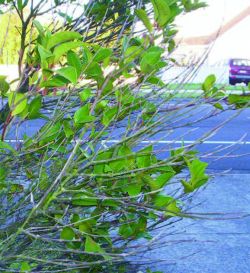
 FROM your photo the mix of dead
shoots along with some apparently healthy ones suggests some of
the plants in the hedge could be suffering from root disease or
perhaps some sort of damage to the lower part of the trunk. Or
it’s possible it has been affected by herbicide drift, if any has
been sprayed nearby, or some chemical, like waste oil or the like
that may have been disposed of in the surrounding soil.
FROM your photo the mix of dead
shoots along with some apparently healthy ones suggests some of
the plants in the hedge could be suffering from root disease or
perhaps some sort of damage to the lower part of the trunk. Or
it’s possible it has been affected by herbicide drift, if any has
been sprayed nearby, or some chemical, like waste oil or the like
that may have been disposed of in the surrounding soil.
First, check the lower part of the trunk for damage — look for damage to the bark where it may have been badly bruised by bumping with a lawn mower. It’s surprising how often this can lead to severe damage to trees and shrubs. Weedeater damage is equally as common, causing death to many plants through ring-barking just above the soil level. Many trees, including lilly pilly, can often recover from trunk damage if it’s not extensive and further damage is prevented.
If you don’t find any obvious damage, then check out the condition of the soil. Is it waterlogged? Lilly pilly will survive occasional waterlogging but not for prolonged periods, especially if the soil is heavy clay. You may not be able to do much to improve drainage or remove contaminants from the soil, but in time the weather should improve, the water content of the soil diminish and, with a bit of luck, in spring you’ll get strong new growth and eventually the tree may recover to fill in the gap in your hedge.
In an attempt to encourage growth, I suggest you cut out all the dead shoots now, even if this means drastically reducing the size of the tree.
Weekend Gardener, Issue 200, 2006, Page 39

Advice by Andrew Maloy, former Plant Doctor of the Weekend Gardener and Kiwi Gardener magazines
Plant Doctor Archive
700 gardening Q&A’s
Source

- The views expressed here are not necessarily those of the RNZIH
- Content or advice may be out-of-date.